Research
When do mobile games show the first offer? Data from 25 first sessions
Published October 20, 2026 · Data as of October 20, 2026 · Gamedexy research
In the first sessions of 25 mobile games we captured from a fresh install, the first shop or offer screen appeared at a median of step 20, about 40% of the way through the session and about 3 minutes into the recording. Only two games sold anything in the first 10 screens, and only one showed a true subscription paywall.
Key numbers
- 23 of 25 games showed an offer, shop or purchase screen in the captured first session.
- The first one arrived at a median of step 20. The middle half of games fell between step 14 and step 32.
- 2 games showed an offer within 10 steps, 13 within 20 and 17 within 30.
- 8 games showed a rewarded ad, at a median of step 50. We found no interstitial ads.
- 1 of 25 games showed a subscription offer (Brain Test).
Why the first session matters
Most players who install a mobile game do not come back the next day. GameAnalytics, which collects data from thousands of games, reported that by the end of 2024 even the top quarter of games kept only about 26% to 28% of players to the next day, and the bottom quarter kept 10% to 11.5%. The first session is the one moment a game reaches every player it acquired, so when it first asks for money is a real design decision, not a detail.
We wanted a plain answer to a question designers ask a lot: how soon do casual mobile games show the shop? So we counted, in order, every distinct screen of each game's first session from our library.
The data
Steps are positions in each game's "Full first session" flow: the earliest fresh-install capture we hold, with near-duplicate gameplay frames removed. Seconds are recording time from the first screen. Rows are sorted by when the first offer appears.
| Game | Steps in first session | First offer, step | First offer, seconds in | First rewarded ad, step |
|---|---|---|---|---|
| Train Miner | 64 | 7 | 60 | none |
| Sled Surfers | 38 | 9 | 36 | none |
| Brain Test | 38 | 11 | 69 | 21 |
| Search It | 61 | 11 | 47 | none |
| Find Differences | 30 | 12 | 63 | none |
| Magic Sort! | 24 | 14 | 98 | none |
| Block Out! Color Sort Puzzle | 33 | 16 | 187 | none |
| Royal Smash | 35 | 16 | 159 | none |
| Screwdom | 44 | 16 | 58 | none |
| Perfect Makeover Cleaning ASMR | 48 | 19 | 82 | none |
| Little Farm Story | 71 | 20 | 159 | 9 |
| Lumber Inc | 76 | 20 | 210 | 50 |
| Snake Clash | 73 | 20 | 207 | 70 |
| Eatventure | 68 | 23 | 483 | 65 |
| Frost World | 36 | 24 | 237 | 31 |
| Hooked Inc | 66 | 24 | 104 | 65 |
| XP Hero | 78 | 29 | 361 | none |
| Match Factory | 66 | 32 | 165 | none |
| Flop House | 59 | 34 | 541 | none |
| Colony Flow! | 54 | 35 | 415 | none |
| Merge Cooking: Theme Restaurant | 76 | 41 | 295 | none |
| Royal Kingdom | 56 | 43 | 460 | none |
| Fluffy Drop | 59 | 58 | 666 | 50 |
| Last Asylum | 79 | none | none | none |
| Meowdoku! | 25 | none | none | none |
"None" means the screen type did not appear in the captured first session. It does not prove the game never shows it later.
What we found
1. The first offer is a mid-session event, not an opening move
The earliest offer was Train Miner at step 7, and the latest was Fluffy Drop at step 58. Most games sat in between, once the tutorial was over. Every game in the set also has a shorter onboarding flow we curated to isolate the tutorial; those run 4 to 10 steps (median 7). In every game that sold, the first offer came later in the session than that tutorial stretch is long.
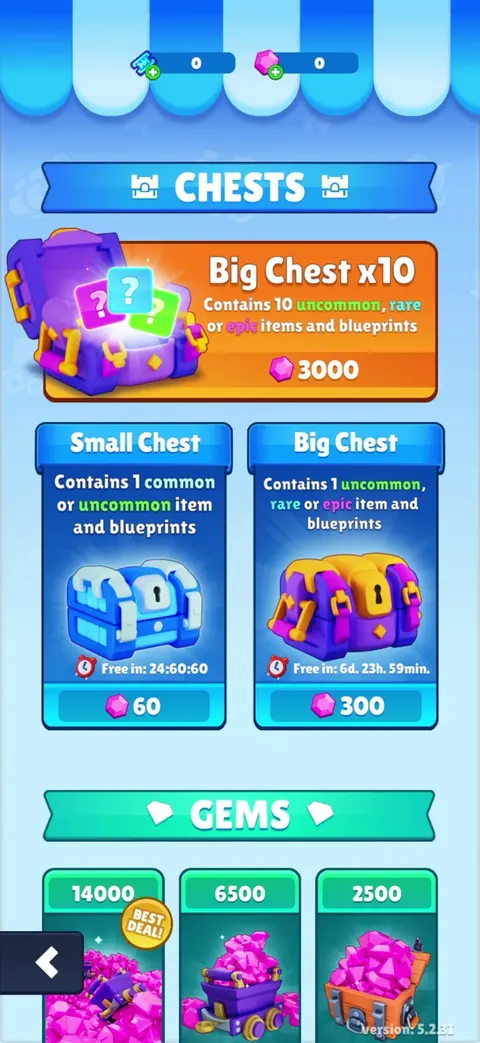
Train Miner, step 7 of full first session. Captured 2026-07-14.
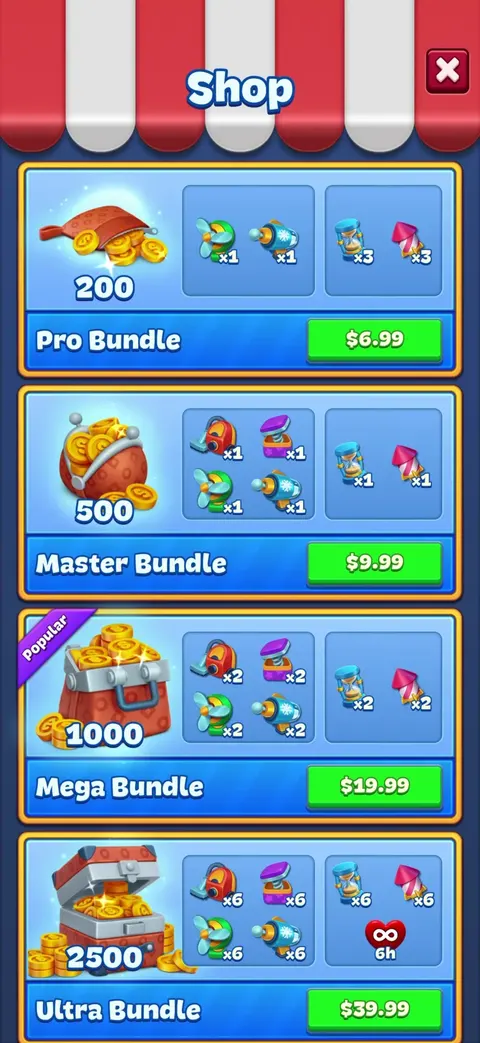
Match Factory, step 32 of full first session. Captured 2026-07-13.
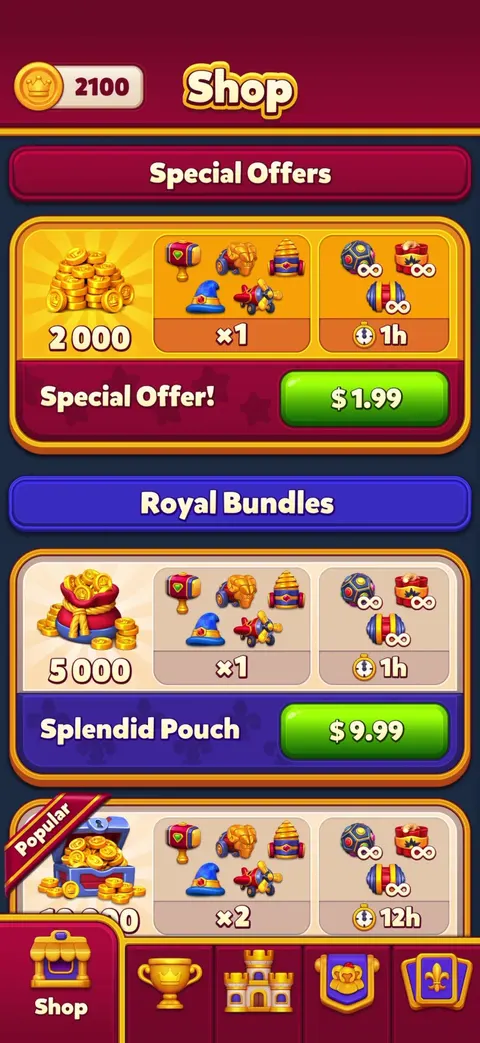
Royal Kingdom, step 43 of full first session. Captured 2026-07-12.
2. Very early and very late selling are both rare
Only two games (Sled Surfers and Train Miner) put an offer inside the first 10 steps, and only three (Fluffy Drop, Merge Cooking: Theme Restaurant and Royal Kingdom) waited past step 40. The rest cluster in the teens to low 30s. With 25 games we would not read more into the exact median than "somewhere around step 20".
Last Asylum and Meowdoku! showed no offer at all in the steps we hold. Both may simply sell later than our capture ran, so we count them as "not seen", not "never".
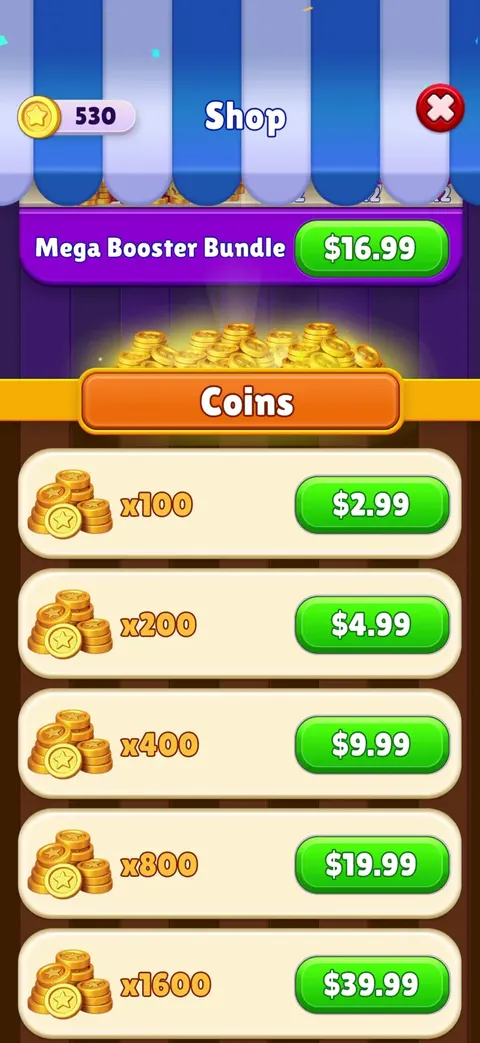
Fluffy Drop, step 58 of full first session. Captured 2026-07-13.
3. Rewarded ads are uncommon in a first session, and mostly late
Eight games showed a rewarded ad (Brain Test, Eatventure, Fluffy Drop, Frost World, Hooked Inc, Little Farm Story, Lumber Inc and Snake Clash), at a median of step 50. Fluffy Drop (ad at step 50, offer at step 58) and Little Farm Story (ad at step 9, offer at step 20) asked players to watch an ad before showing them a price.
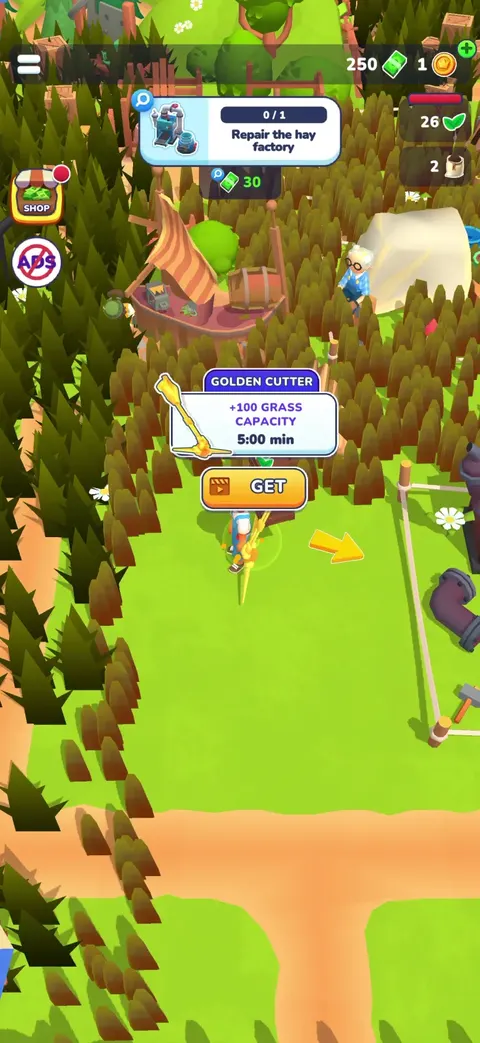
Little Farm Story, step 9 of full first session. Captured 2026-07-14.
4. True subscriptions are rare, and keyword searches overcount them
We first searched the on-screen text of every offer for subscription words such as trial, weekly and VIP. That flagged four games. Looking at each screen told a different story: only Brain Test showed a real subscription. The others were a one-off $3.99 item sold during a limited season (Hooked Inc), a 7-day VIP pack with no sign of a renewing subscription on screen (Little Farm Story) and a VIP investor that pays out cash in exchange for watching an ad (Lumber Inc).
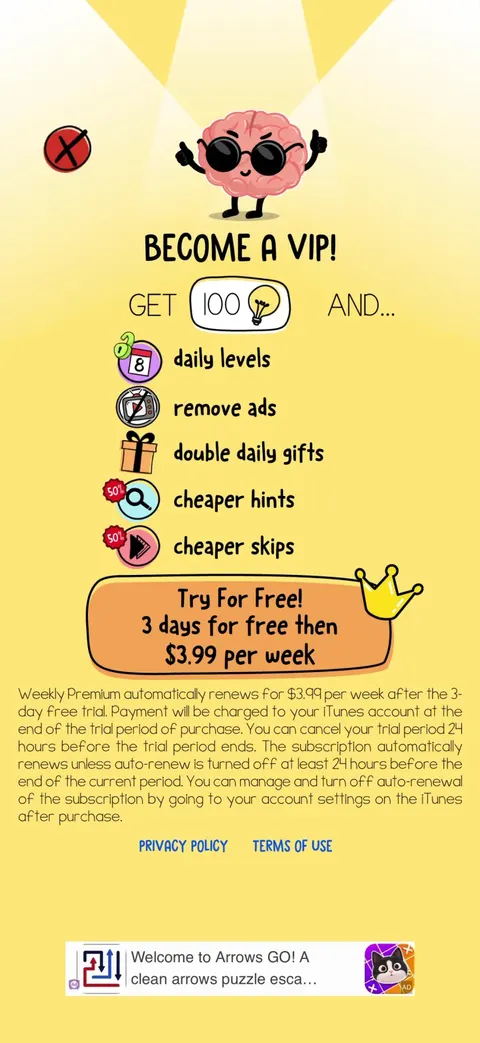
Brain Test, step 24 of full first session. Captured 2026-07-13.
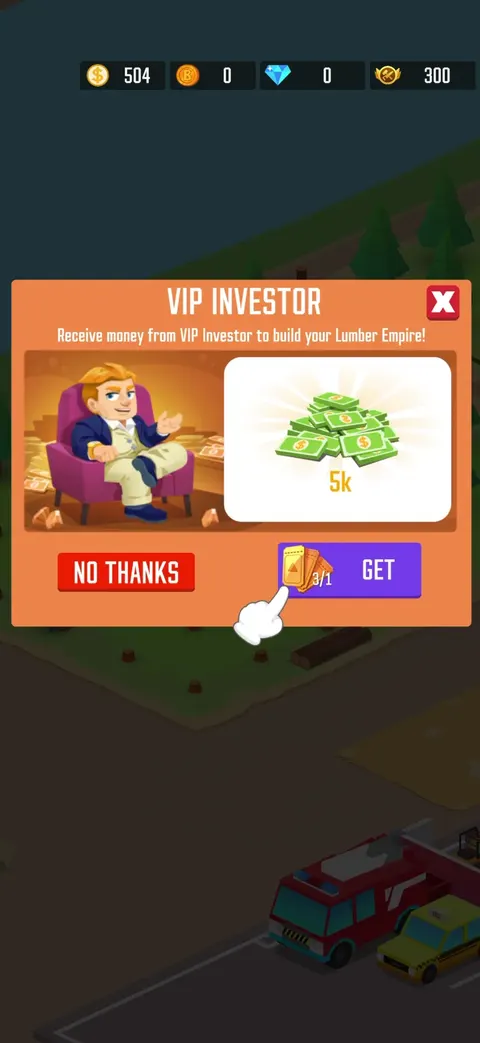
Lumber Inc, step 20 of full first session. Captured 2026-07-14.
The lesson for anyone researching competitors: the word "VIP" means very different things across games. Read the screen, not the label.
5. First session length mostly reflects how long the capture ran
First sessions in the library run 24 to 79 steps, with a median of 59, and a median recording span of about 12 minutes. That describes our captures as much as the games, so we do not treat it as a measure of tutorial length.
What this suggests if you are designing a first session
This is our reading of the data, not a rule:
- Most games in our sample let the tutorial finish before showing a price.
- A first offer somewhere between a third and halfway through the first session is the common pattern; selling in the first ten screens is the exception.
- Rewarded ads, where they appear at all, tend to come later than the first offer.
- If you are benchmarking competitors, record the whole session and count in order. Single screenshots hide the timing, and timing is the design.
Limits
- 25 games is a small sample, and it is not random. The library focuses on portrait casual, puzzle and idle games. Do not read these numbers as the whole mobile market.
- One capture per game. Each game is one fresh-install session on one device and account. Real first sessions vary with region, version, A/B tests and what the player taps.
- Capture length is chosen by the person recording. A session that ends early cannot show a later offer.
- Steps are not a clock. A step is one distinct screen after near-duplicate gameplay frames are removed. Seconds include pauses in the recording.
- Screen labels are AI-assisted. Categories were assigned with vision models under our publication policy, so a few offer or ad screens may be mislabelled. Interstitial ads in particular may be under-counted.
Method
We took each game's published "Full first session" flow and found the first screen labelled as an offer, shop or purchase sheet, the first rewarded ad and the first interstitial. We searched offer screens' extracted text for subscription keywords, then checked every match by eye. Data as of 2026-10-20. Every game and flow in the table links to the screens behind it.
Sources
- GameAnalytics: Mobile gaming benchmarks in 2025 (summary by Game Dev Reports). Day-one retention figures for end of 2024, from data on 11,600 gaming apps